
Discover how the DP World Tour profiles elite golfers using objective strength and impulse testing and how you can apply the same methods to your own training.
Beyond Screens: Test What Really Matters for Golf
Thomas Malchow, MSKin, CSCS
Golf Performance Specialist
Published on July 23, 2025
Golf Performance Specialist
Published on July 23, 2025
Introduction
Assessment is essential to golf performance. From movement screens to biomechanical analysis, many golfers undergo some form of testing in hopes of optimizing their swing or preventing injury. However, not all assessments measure the physical qualities that matter most in golf.
Despite their popularity, many golf-specific screens—like the Titleist Performance Institute (TPI) screen—lack validation as predictors of performance or injury. These screens rely on subjective interpretation and emphasize posture or mobility in ways that don't fully reflect the demands of the swing. While the screen itself doesn't assess kinematic sequencing, TPI's broader model promotes an 'ideal' sequence of hips, trunk, arms, and club. However, evidence shows that elite golfers generate speed and control through a variety of individualized patterns
What the data does support are objective, repeatable tests that measure force production, impulse, and explosive capability. Countermovement jump (CMJ) impulse, for example, has shown strong correlations with clubhead speed in elite golfers. Measures of both lower- and upper-body strength are also linked to performance.
This article breaks down the physical metrics most relevant to clubhead speed, explains how they can be tested without expensive equipment, and offers a practical approach for golfers to track meaningful progress in their training. Whether you’re a coach or a competitive player, understanding what to measure—and why—can help focus your efforts on what actually transfers to the course.
The Problem with Popular Screens
Many golfers have undergone movement screens in the hopes of improving swing mechanics or reducing injury risk. The most common is the TPI screen. While widely adopted, it has not been validated in peer-reviewed research as a predictor of either performance or injury.
As Dr. Dan Coughlan explains in his Silly Screens series on GolfPerformanceNetwork.com, the TPI screen and similar protocols often emphasize static positions—like pelvic tilt or toe touch—and general mobility assessments that do not reflect the speed, sequencing, or loading demands of the golf swing. These screens rely on subjective interpretation rather than objective measurement.
Some assessments go further, using 3D motion capture to evaluate segmental sequencing. While more objective, they often reinforce the flawed belief that all golfers should move in a specific order.
A core assumption of the TPI model is the existence of an “ideal” kinematic sequence: hips initiate, followed by the trunk, arms, and then the club. But real-world data tells a more complex story. As Coughlan outlines in Is there an ‘ideal’ kinematic sequence?, movement variability — not uniformity — appears to be the norm among elite golfers. Citing Tinmark et al. (2010), he notes that while group averages suggest this “ideal” sequence, individual data reveal considerable overlap between segments. Many players simply don’t move in the “ideal” order.
Further evidence from Cheetham and Broker (2016) shows that only 25% of PGA Tour players and 39% of LPGA players demonstrated the so-called “ideal” sequence. In fact, alternative patterns like pelvis–wrist–torso–club occurred more frequently, underscoring the diversity of movement strategies even at the highest levels of play.
Coughlan extends this argument with examples from baseball, referencing Scarborough et al. (2020, 2021), who analyzed hundreds of professional throws and found that none followed the theoretically ideal proximal-to-distal sequencing pattern. Not only did sequencing vary widely between athletes, it varied from throw to throw within the same athlete. These findings challenge the assumption that more consistent or more “ideal” sequencing leads to better performance or reduced injury risk.
In short, just because something looks “golfy” doesn’t mean it’s useful. If the goal is to increase clubhead speed, prevent injury, or improve performance, we need to move beyond movement screens with postural bias and instead focus on measurable physical qualities that actually drive performance.
And if we want to identify those qualities, the best place to start is with Strokes Gained: Off the Tee, one of the strongest predictors of scoring advantage in modern golf.
Why Driving Distance Matters
To understand which physical traits influence SG:OTT, it helps to look at the elements that contribute most to this metric. Across modern shot-tracking data, driving distance is the variable with the greatest impact on SG:OTT at every competitive level.
Strokes Gained: Off the Tee compares a player’s driving to the field average, and golfers who hit the ball farther consistently outperform those who do not. This pattern is seen across elite amateurs, PGA Tour, and LPGA Tour players. Accuracy still contributes, but distance has the larger effect on scoring, particularly on par 4s and 5s.
Simply put: longer tee shots create shorter approach shots, better proximity, and more scoring opportunities. That’s why clubhead speed has become such a central focus in golf performance training. It’s the physical quality most directly linked to producing more distance and gaining strokes.
If we know that more distance creates a measurable scoring edge, then it makes sense to focus on the physical traits that contribute to it. To do that, we need to understand what generates distance in the first place and how those forces are created during the swing.
Golf Is a Momentum Sport
Tee shot performance is largely determined by how much momentum the clubhead carries into the ball. The more momentum a golfer can generate and transfer at impact, the farther the ball will travel.
In physics, momentum is the product of mass and velocity (momentum = mass × velocity). In the golf swing, the mass of the clubhead remains constant. That means the only way to generate more momentum—and ultimately more ball speed—is by increasing clubhead velocity.
That momentum, however, must be generated and applied within the brief window of the downswing. This is where another key physical quality—impulse—comes into play. Impulse is defined as the product of force and the time over which it is applied (impulse = force × time). In the context of the golf swing, time refers specifically to the duration of the downswing. In practical terms, impulse reflects how much force a golfer can apply to the club during that short window. While the club is the endpoint, most of this force originates from the ground—primarily through vertical ground reaction forces—making lower-body force production a critical driver of swing impulse.
The greater the impulse applied during the downswing, the more momentum is transferred to the clubhead.
This has clear performance implications. Golfers who can generate more impulse tend to produce higher clubhead speeds at impact. And because clubhead speed is the strongest determinant of driving distance, impulse becomes a critical physical quality to measure.
How to Measure Impulse
Because golf is a momentum sport—and momentum is driven by impulse—measuring impulse offers an objective way to assess the physical qualities that underpin clubhead speed.
In the context of a countermovement jump (CMJ), impulse reflects the total amount of force the lower body applies into the ground during the push-off phase. It represents both how hard and how long the golfer pushes against the ground to propel themselves upward.
Wells et al. (2020) demonstrated this relationship using countermovement jump (CMJ) testing in European Challenge Tour players. Their analysis showed that CMJ impulse explained 37.9% of the variance in clubhead speed (r = 0.62). More specifically, for every 45.6 N·s increase in positive impulse clubhead speed increased by 3.69 mph, typically translating to 10–12 additional yards of carry distance.
Robinson et al. (2024) similarly found that CMJ impulse showed the strongest and most consistent correlations with clubhead speed, ball speed, and carry distance in professional female golfers (r = 0.69–0.72). Brennan et al. (2024), in a systematic review and meta-analysis, identified CMJ impulse as the most reliable physical predictor of clubhead speed, reporting a pooled correlation coefficient of r = 0.82 across studies.
In professional and research settings, CMJ impulse is typically measured using dual force plates, which calculate positive impulse based on the total force applied from the start of movement through takeoff. While this remains the gold standard, golfers outside of laboratory or tour environments can still access meaningful data through validated mobile apps.
The My Jump Lab app, for example, estimates net impulse—a slightly different metric—by combining high-speed video with body mass and flight characteristics. This method has been shown to produce valid and reliable measurements when compared to dual force plate testing (Hukin et al., 2023). Although net and positive impulse differ in calculation and absolute values, the relationship to performance remains strong. Using the same dataset, Wells et al. (2020) found that every 26.27 N·s increase in net impulse corresponded to a 3.91 mph increase in clubhead speed (r = 0.63)—again, approximately 10–12 yards of added distance.
Importantly, net impulse values are typically 30–40% lower than positive impulse values. So if you're using an app to estimate net impulse, keep in mind that the gold-standard force plate values will be higher. This matters when comparing your data to tour-level benchmarks.
To give golfers and coaches a sense of how their numbers compare, Dan Coughlan of the European Tour Performance Institute (ETPI) has published the following CMJ positive impulse profiling standards:
These values provide a helpful reference for interpreting results and tracking progress. Whether you're using a force plate or an app, CMJ impulse remains one of the most reliable and accessible physical metrics linked to golf performance.
Of course, generating high impulse requires high force output and that’s where strength comes in.
Strength: The Foundation of Impulse
If impulse is what drives momentum in the golf swing, then strength is what makes that impulse possible. It’s the baseline physical quality that supports force production, enhances robustness, and enables the development of explosive outputs like jump impulse and rotational speed. Without sufficient strength, a golfer lacks the foundation needed to produce the force required for high clubhead speeds, regardless of technique.
Research consistently supports this relationship. Wells et al. (2020) found that peak force measured during the isometric mid-thigh pull (IMTP) had a moderate correlation with clubhead speed (r = 0.482) in European Challenge Tour players. Brennan et al. (2024), in a meta-analysis spanning both male and female populations, similarly identified strength as a key physical characteristic associated with clubhead speed, reporting pooled correlations of r = 0.47 for lower-body strength and r = 0.48 for upper-body strength. Robinson et al. (2024) also measured IMTP and isometric bench press peak force and found clear distinctions between faster and slower professional female golfers, reinforcing the importance of assessing absolute force capacity.
Beyond performance, strength also contributes to injury resilience. Higher baseline force capacity enables golfers to better tolerate the demands of high-volume practice, tournament travel, and the repetitive loading inherent in the swing. It plays a central role in both performance and durability, making it a quality worth tracking over time.
How to Measure Strength
In professional and research settings, maximal strength is most commonly assessed using the isometric mid-thigh pull (IMTP). This test—part of the European Tour Performance Institute (ETPI) battery—involves pulling against a fixed bar while standing on dual force plates. It provides a clean, repeatable measure of net peak force (i.e., peak force minus body weight) with minimal fatigue. However, the need for force plates limits its use outside of elite environments.
To give context, Dan Coughlan has published normative IMTP net peak force data from the ETPI:
For golfers without access to force plates, the trap bar deadlift offers a practical and reliable proxy for measuring strength. Although the IMTP doesn’t replicate the deadlift pattern exactly, research has shown strong correlations between gross IMTP peak force and barbell deadlift one-repetition maximum (1RM) in trained individuals (McGuigan et al., 2010; Comfort et al., 2015).
Note: The ETPI normative values above are based on net peak force, while the IMTP–deadlift correlations are based on gross (absolute) peak force. Be mindful of this distinction when interpreting results.
The following estimates are not taken directly from published studies but are derived from regression trends observed in trained populations. Specifically, research suggests that multiplying IMTP peak force (in Newtons) by approximately 0.03–0.04 provides a rough estimate of 1RM in kilograms for the barbell deadlift. For golfers using a trap bar, 1RM values may be 10–12% higher due to the lift’s more upright mechanics, reduced shear forces, and greater quad contribution.
These are general reference points, not precise predictions. Individual results will vary based on technique, training history, and neuromuscular efficiency.
While most IMTP–deadlift comparisons in the literature involve the barbell, the trap bar deadlift remains the preferred option for golfers. It allows for greater load expression with less technical demand, promotes a more upright posture, and places lower stress on the spine and hips—making it especially suitable for aging athletes or those new to heavy lifting.
In most field settings, it’s neither necessary—nor always safe—to test a true 1RM. Instead, estimated 1RMs can be calculated from submaximal efforts using 3RM or 5RM tests. The following conversions are commonly used:
3RM ≈ 93–95% of 1RM
5RM ≈ 87–89% of 1RM
When using rep-max tests, it’s important to standardize setup, technique, and rest periods. The goal is to produce a reliable strength estimate that supports both monitoring and programming decisions.
Ultimately, impulse tells us how much force is applied over time, while strength tells us how much force is available to begin with. Both qualities matter. By tracking strength alongside explosive outputs like jump impulse, golfers and coaches can better identify limiting factors and guide performance improvements more precisely.
Testing is Training: How to Use This Data
While performance tests are typically viewed as separate from training, the assessments discussed in this article can—and should—be integrated directly into a golfer’s weekly routine.
The countermovement jump (CMJ), in particular, serves not only as a diagnostic tool but also as a valuable training stimulus. When performed with intent, the CMJ targets lower-body explosiveness, reinforcing the same qualities it’s designed to measure. In this way, it functions both as a test and exercise.
For best results, jump testing should be performed once per week, on the same day, following a consistent warm-up. This helps ensure reliable comparisons over time. Ideally, it’s placed before strength training—when fatigue is low and output is highest. By standardizing the timing, environment, and warm-up, golfers can accurately monitor progress and identify meaningful changes in performance.
The same principle applies to strength testing. For golfers without access to force plates or IMTP equipment, the deadlift provides a practical, repeatable option for tracking maximal strength. Incorporating it into a weekly strength session builds foundational capacity while allowing for progress monitoring. Once per month, a 3-rep or 5-rep max test—performed under standardized conditions—can be used to assess changes in strength over time. These submaximal tests offer reliable insights without the risks associated with true 1RM efforts.
For most golfers, the trap bar deadlift remains the most accessible and joint-friendly way to test and train maximal strength. Its biomechanics make it better suited to the demands of golf and to the bodies of the people who play it.
More importantly, this approach encourages a shift in mindset: testing is not an occasional event—it’s a consistent part of training. Small changes in CMJ impulse or estimated deadlift strength can signal adaptation, recovery needs, or the effectiveness of the current training block.
Whether you’re tracking with force plates, mobile apps, or just the bar, integrating performance testing into the training week provides more than data. It creates feedback, focus, and a clearer picture of what’s working. When testing aligns with training, everything becomes more targeted, more responsive, and more effective.
The countermovement jump (CMJ) and isometric mid-thigh pull (IMTP) are core components of the European Tour Performance Institute (ETPI) testing battery used with players on the DP World Tour. This article outlines practical ways for everyday golfers to replicate those same tests using accessible tools. By adopting the same assessment principles used at the highest level, golfers can bring more clarity and purpose to their own training.
From Testing to Targeted Training
While jump and strength tests provide valuable insight into progress, they can also be used to solve specific performance problems. This is the foundation of an outcome-focused, adaptation-led approach to training. It begins with the end goal and works backward to select the right interventions.
For example, consider a golfer who is consistently losing strokes off the tee despite solid technique and accuracy. Testing may reveal that their countermovement jump (CMJ) impulse is below average for their peer group. That becomes the performance problem: insufficient lower-body force production. The next step is to define a measurable outcome, such as increasing CMJ positive impulse by 50 N·s or net impulse by approximately 30 N·s (depending on the measurement method), which has been shown to correlate with meaningful gains in clubhead speed and driving distance.
From there, the focus shifts to the adaptations needed to achieve that outcome. In this case, improving maximal concentric force from the legs might require increasing neural drive, recruiting higher-threshold motor units, and building muscle cross-sectional area. These physiological goals then guide exercise selection: trap bar deadlifts, front squats, heavy trap bar jumps, or isometric pulls may all be appropriate depending on context.
This model—outlined by Coughlan et al. (2023)—ensures that every training input is chosen for its relevance to the outcome, not just because it fits a method or trend. It helps clarify priorities, especially when time or equipment access is limited, and brings structure to the way physical prep connects with on-course performance. Rather than training everything at once, you’re training for a reason. That reason is anchored by objective data and clear outcomes.
Summary: Test What Transfers
Improving golf performance starts with identifying what actually matters. Instead of relying on subjective screens, golfers should test objective physical qualities like impulse and strength, both closely tied to clubhead speed and driving distance.
This doesn’t require high-tech equipment. Countermovement jump (CMJ) testing—done weekly using a mobile app or force plate—offers a simple way to monitor explosive force production. Deadlift testing, especially with a trap bar, provides a safe, repeatable way to track strength progression through estimated 1RM or monthly 3–5RM efforts.
These aren’t just assessments. They’re built-in feedback tools. When integrated into regular training, they show what’s improving, what’s plateauing, and where your next gains might come from.
In the end, it’s not about testing for testing’s sake. It’s about tracking the physical traits that actually transfer to performance and adjusting training accordingly.
Ready to Train What Matters?
If you're a serious golfer looking to increase clubhead speed, build resilience, and get more out of your training, we can help. At Robust Golfer, we use proven performance metrics—not gimmicks—to guide personalized strength and power development
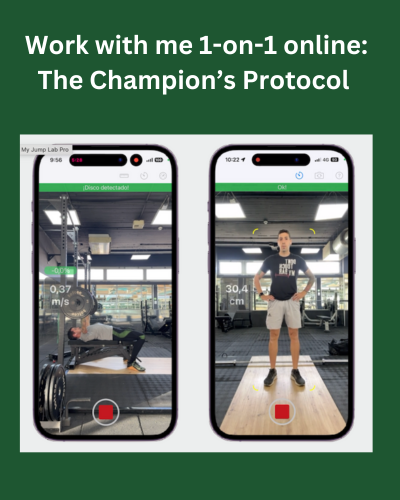
Apply for The Champion’s Protocol to work 1-on-1 with me, or join The Robust Protocol for a structured, self-guided training plan built on the same evidence-based principles.
Measure what matters. Train with purpose. Perform at your best.


arrow_drop_down_circle
Divider Text